
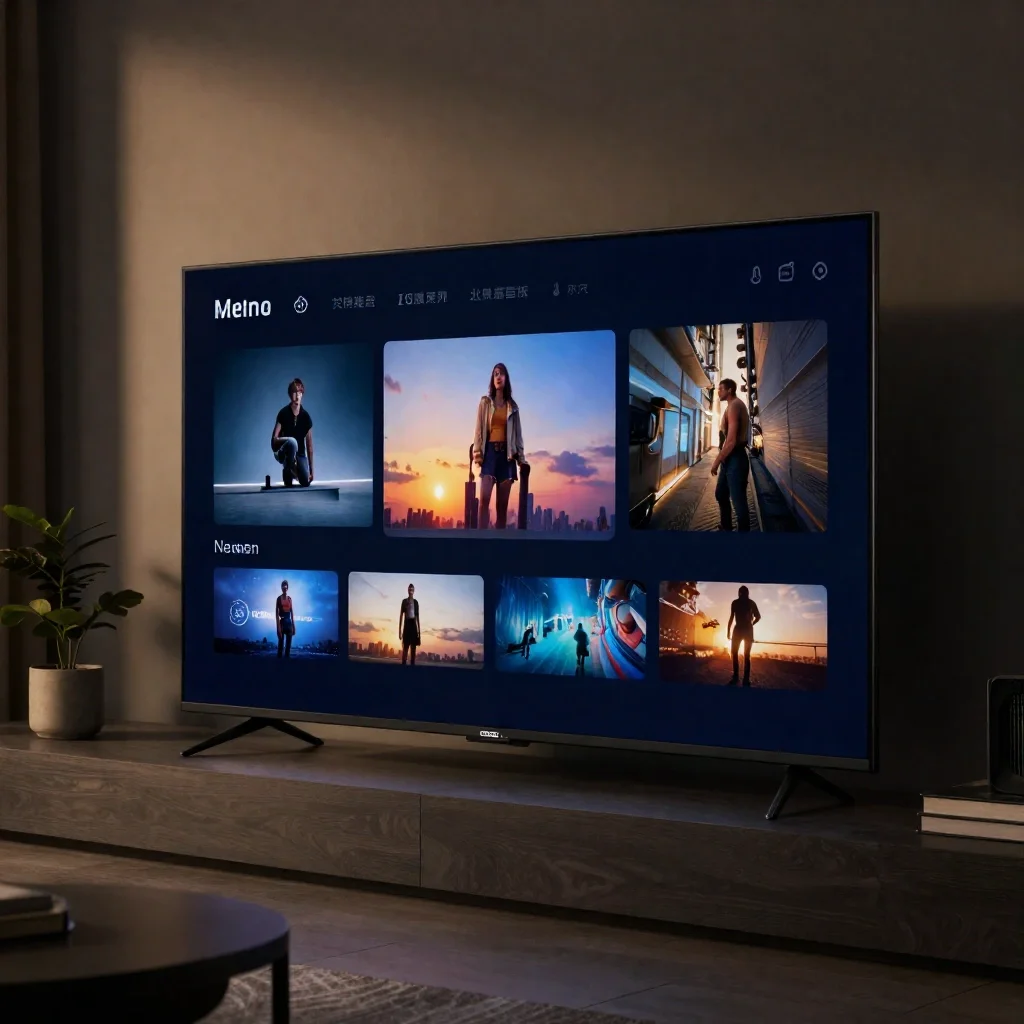
If you just bought a new Smart TV or your current one looks washed out, too blue, or just plain off — you are not alone. Most TVs leave the factory with picture settings designed to grab your attention in a bright showroom, not to look good in your living room.
The good news? You do not need to spend $300 hiring a professional to fix it. This guide will show you exactly how to calibrate a smart TV in as little as five minutes — in plain, simple English.
What Does “Calibrating a Smart TV” Actually Mean?
Calibrating a TV means adjusting its picture settings so that what you see on screen matches what the director intended when they made the film or show. It covers things like:
- How bright or dark the screen looks
- Whether skin tones look natural or greenish/pale
- Whether motion looks smooth and cinematic or fake and plastic
A properly calibrated TV is easier on your eyes, shows more detail in dark scenes, and makes colors look real rather than cartoonish.
Why Your TV Looks Bad Right Out of the Box
TV manufacturers use a picture mode called Vivid or Dynamic as the factory default. This mode cranks up the brightness, blue tones, and sharpness to make the TV look impressive under the harsh fluorescent lighting of a store display wall.
At home, under normal room lighting, this same setting makes your TV look like this:
- Skin tones appear pale or slightly blue
- Bright scenes look blown out and overexposed
- Dark scenes lose shadow detail (blacks look “crushed”)
- Movies look like they were shot with a cheap camcorder (the infamous Soap Opera Effect)
The fix is simpler than you think.
The 3 Golden Rules: Fast Smart TV Calibration in 5 Minutes
If you only have five minutes, follow these three rules. They will fix 90% of picture problems instantly.
Rule 1: Switch to the Right Picture Mode
This is the single most important change you can make. The picture mode controls a whole group of settings at once.
| Picture Mode | What It Does | Should You Use It? |
|---|---|---|
| Filmmaker Mode | Matches Hollywood color standards exactly | ✅ Best choice for movies |
| Cinema / Movie | Very close to Filmmaker, slightly warmer | ✅ Great for most content |
| Standard | Balanced but still a bit too blue | ⚠️ Okay if others aren’t available |
| Vivid / Dynamic | Oversaturated, high blue, eye-straining | ❌ Avoid for home use |
| Sports | Boosts brightness and motion for live TV | ✅ Only for live sports |
| Game Mode | Reduces input lag for controllers | ✅ Only for gaming |
Action: Go to your TV’s Settings → Picture → Picture Mode → Select Filmmaker Mode or Cinema.
If your TV does not have Filmmaker Mode, Cinema or Movie mode is the next best option. Both are calibrated to the D65 white point, which is the international standard used in film production.
📌 Featured Snippet Answer: The best picture mode for most Smart TVs is Filmmaker Mode or Cinema Mode. These presets are calibrated to match professional film color standards, making movies and shows look natural and accurate.
Rule 2: Turn Off Motion Smoothing (Kill the Soap Opera Effect)
Motion smoothing — also called frame interpolation — makes 24fps movies look weirdly hyper-real, like a cheap daytime soap opera or a behind-the-scenes video. This is because your TV is adding fake frames between real ones to make motion appear smoother.
Here is where to find it on major brands:
| TV Brand | Setting Name | Where to Find It |
|---|---|---|
| LG | TruMotion | Picture → Advanced Settings → TruMotion |
| Samsung | Auto Motion Plus | Picture → Expert Settings → Auto Motion Plus |
| Sony | Motionflow | Picture → Advanced → Motionflow |
| TCL / Hisense | Motion Enhancement | Picture → Advanced Picture Settings |
| Vizio | Smooth Motion Effect | Picture → More Picture → Smooth Motion Effect |
Action: Turn it Off completely, or set it to Custom with both the Blur Reduction and Judder Reduction sliders at 0.
This one change alone will make movies feel like you are watching them in a real cinema.
Rule 3: Set Color Temperature to Warm
When you first switch to Warm color temperature, the image might look slightly yellow or orange. This is normal. Your eyes have been trained to see the cool, blue-tinted factory settings as “normal.”
Give it ten minutes. Your eyes will adjust, and you will start to notice that:
- Skin tones look like real human skin
- White objects look naturally white, not blue-white
- The image feels easier and more relaxing to watch
Action: Go to Picture → Color Tone (or Color Temperature) → Select Warm 2 (or just Warm on some TVs).
Step-by-Step Deep Calibration Guide (Beyond the 5-Minute Fix)
Once you have done the three golden rules, you can go deeper with manual adjustments. You do not need any special tools for this — just your eyes and a few test scenes.
Step 1: Set the Brightness (Black Levels)
Despite what the name suggests, the Brightness slider on most TVs does not make the image brighter overall. It actually controls how dark the darkest parts of the image are — your black levels.
How to do it:
- Find a dark scene on your TV (a night scene in any movie works well — try something with a lot of dark shadows)
- Slowly lower the Brightness slider
- Stop when the black bars at the top and bottom of a widescreen movie match the color of your TV’s plastic bezel
- Make sure you can still see detail in shadows — dark hair, dark clothing, dark corners of a room
If you go too low, shadows will look like flat black blobs with no texture. That is called “black crush” and you want to avoid it.
Step 2: Set the Contrast (White Levels)
Contrast controls how bright the brightest whites appear on screen.
How to do it:
- Find a scene with bright clouds, snow, or a white shirt in sunlight
- Slowly raise the Contrast slider
- Stop just before the bright areas become a flat, textureless white blob
- You should be able to see individual cloud textures or fabric weave in clothing
The goal is brilliant whites that still have visible detail in them.
Step 3: Adjust the Backlight or OLED Light
This is different from Contrast. The Backlight setting (called OLED Light on OLED TVs, or Pixel Brightness on some newer models) controls the raw power going to the light source behind the screen.
This one should be adjusted based on your room lighting:
| Room Condition | Recommended Backlight Level |
|---|---|
| Bright daytime room with windows | 80–100% |
| Average evening room lighting | 50–70% |
| Dark room at night (movie watching) | 20–40% |
| Pitch-black room | 10–20% |
Watching a TV that is too bright in a dark room causes eye strain and headaches surprisingly quickly. Lowering it for nighttime viewing also makes dark scenes look dramatically better.
Step 4: Fine-Tune Color and Tint (Optional)
Most people do not need to touch these, but if skin tones still look slightly off after the steps above:
- Color / Saturation: If colors look too intense, lower it slightly. If they look gray and dull, raise it slightly. A value around 45–55 out of 100 is usually correct.
- Tint / Hue: This shifts colors between green and red. Leave this at 0 unless skin tones have a visible green or red cast to them.
Step 5: Sharpness — Less Is More
This surprises a lot of people: on a 4K or 8K TV, the ideal Sharpness setting is 0 or very low (around 5–10 out of 100).
Why? The Sharpness slider does not actually add real detail to the image. Instead, it adds artificial halos and edge enhancement around objects. On a high-resolution 4K panel, this makes the image look processed and unnatural rather than sharp.
If your content is genuine 4K HDR, the sharpness is already in the source. The TV does not need to add fake sharpness on top.
| TV Resolution | Recommended Sharpness |
|---|---|
| 1080p (Full HD) | 10–20% |
| 4K (Ultra HD) | 0–10% |
| 8K | 0–5% |
DIY vs. Professional Calibration: Which One Do You Need?
| Factor | DIY Calibration | Professional (ISF/Calman) |
|---|---|---|
| Cost | Free | $250–$500 |
| Time Required | 5–15 minutes | 2–3 hours |
| Accuracy | Good (visual estimate) | Perfect (measured with colorimeters) |
| Equipment Needed | None | Light meters, colorimeter hardware |
| Best For | Most home users | Home theater enthusiasts, high-end TVs |
| Result | 85–90% accurate | 99–100% accurate |
For the vast majority of people watching Netflix, YouTube, or cable TV in a normal living room, DIY calibration using the steps in this guide is more than enough. Professional calibration makes sense if you have invested in a high-end OLED or MicroLED TV and want every last percentage point of performance.
You can learn more about professional calibration standards from the Imaging Science Foundation (ISF), the organization that certifies professional TV calibrators worldwide.
Smart TV Calibration for Gaming
If you use your Smart TV for gaming, picture calibration works a little differently.
The most critical setting for gaming is Input Lag — the delay between pressing a button on your controller and seeing the result on screen. Most picture-processing features increase input lag significantly.
The fix: Enable Game Mode in your picture settings.
Game Mode automatically:
- Disables most heavy processing (reducing lag to 10–20ms or less)
- Turns off motion smoothing
- Optimizes the signal path for real-time response
You can still adjust brightness, contrast, and backlight within Game Mode. Just avoid turning on extra processing features like noise reduction or edge enhancement.
For competitive gaming (first-person shooters, fighting games), Game Mode is not optional — it is essential.
2026 Smart Features: AI and Automatic Calibration
Many 2026-model TVs from Samsung and LG now offer automatic smart calibration through their companion apps.
How to use Smart Calibration (Samsung SmartThings):
- Download the SmartThings app on your phone
- Open it and select your TV
- Tap Smart Calibration
- Hold your phone’s front camera up to the TV screen
- The app analyzes the displayed test patterns and automatically adjusts the TV’s internal color lookup tables (LUTs)
LG ThinQ works the same way, using your phone’s camera sensor to measure color output and push corrections directly to the TV.
This is not as precise as a professional colorimeter calibration, but it is significantly better than manual eye-balling — and it is free.
HDR and Dolby Vision: Should You Leave These On?
Yes. If your TV supports Dolby Vision IQ or HDR10+ Adaptive, keep them enabled. These systems use a built-in ambient light sensor in your TV to automatically adjust the picture based on how bright or dark your room is in real time.
This means your TV is essentially self-calibrating as the light in your room changes — a genuinely useful feature that works well in practice.
For more information on HDR formats and how they affect picture quality, RTings.com has an excellent breakdown of every HDR standard currently in use.
How Room Lighting Affects Your Calibration
A perfectly calibrated TV in a bright room will still look worse than a decently calibrated TV in a controlled room. Room lighting has a huge effect on perceived picture quality.
| Lighting Situation | What It Does to the Image | Quick Fix |
|---|---|---|
| Bright sunlight hitting the screen | Washes out colors, reduces contrast | Use a blackout curtain or anti-glare screen |
| Overhead white/cool LED lighting | Makes the image look too blue | Switch to warm-toned bulbs (2700K–3000K) |
| No lighting in a completely dark room | Creates eye strain and perceived halo glow | Use a dim bias light behind the TV |
| Bias lighting behind the TV | Reduces eye strain, improves perceived contrast | Best setup for movie watching |
A simple LED bias light strip placed behind your TV (set to 6500K, which matches the D65 white point) can improve your viewing experience dramatically without touching a single TV setting.
Just Like Calibrating Other Devices
If you have ever wanted to squeeze more performance out of your technology, you know that calibration matters across the board. For example, did you know that calibrating your laptop battery can extend its lifespan and give you more accurate battery percentage readings? The same principle applies to your TV — factory defaults are good enough out of the box, but a few targeted adjustments make a big difference in real-world performance.
Frequently Asked Questions (FAQ)
How do I get the best picture on my Smart TV?
The fastest way is to switch to Filmmaker Mode (or Cinema Mode if Filmmaker is not available) and turn off Motion Smoothing. These two changes alone will transform the picture quality on any modern Smart TV. For a more complete setup, follow the full step-by-step guide above to adjust brightness, contrast, backlight, and color temperature.
Does the Sharpness setting actually make the picture sharper?
No — on 4K and 8K TVs, the Sharpness slider adds artificial edge enhancement that makes the image look processed, not genuinely sharp. The best Sharpness setting for a 4K TV is 0 to 10%. Real sharpness comes from the resolution of your content and screen, not from this slider.
What is the best picture mode for gaming?
Use Game Mode. It disables heavy image processing to reduce input lag — the delay between pressing a button and seeing the action on screen. Lower input lag (10–20ms) is critical for a responsive gaming experience. You can still adjust brightness and contrast within Game Mode.
Is calibrating an OLED TV different from an LED TV?
Yes, slightly. OLED panels produce their own light at a pixel level (unlike LED TVs which use a separate backlight), which means they have perfect black levels by default. On an OLED, you should focus more on:
- Peak Brightness / OLED Light: Keep it moderate to avoid burn-in risk over time
- Color Tint: More critical on OLED since the colors are more saturated by nature
- Black Crush: Less of a problem than LED, but still worth checking in very dark scenes
How often should I recalibrate my TV?
For most people, once is enough. If you move the TV to a different room with different lighting conditions, recalibrate the backlight and brightness settings. Professional calibrators sometimes recommend a full recalibration every 2–3 years as the panel ages and the backlight changes output slightly — but this level of maintenance is only worth it for high-end setups.
Can I use a test disc or website to calibrate my TV?
Yes. Websites like Lagom LCD Test offer free browser-based test patterns you can display on your TV through a smart browser app. These patterns help you set black levels, white levels, and color saturation more accurately than guessing by eye with a movie scene.
Quick Reference: Recommended Settings Cheat Sheet
| Setting | Recommended Value |
|---|---|
| Picture Mode | Filmmaker Mode or Cinema |
| Motion Smoothing | Off |
| Color Temperature | Warm 2 |
| Sharpness | 0–10% |
| Noise Reduction | Off |
| Contrast | 80–90 (adjust by eye) |
| Brightness | 45–55 (adjust by eye) |
| Backlight (Daytime) | 80–100% |
| Backlight (Nighttime) | 20–50% |
| Game Mode | On (gaming only) |
| Dolby Vision IQ / HDR10+ Adaptive | On |
Final Thoughts
Calibrating a Smart TV does not require expensive equipment, technical expertise, or hours of your time. The three golden rules — switch to Cinema or Filmmaker Mode, turn off Motion Smoothing, and set Color Temperature to Warm — will fix the majority of picture problems on any TV in under five minutes.
If you want to go further, the manual adjustments for brightness, contrast, backlight, and sharpness covered in this guide will get you to a result that is close to professional quality without spending a cent.
Your TV is already capable of showing you a beautiful, accurate picture. It just needed a few settings changed to show you what it can really do.