
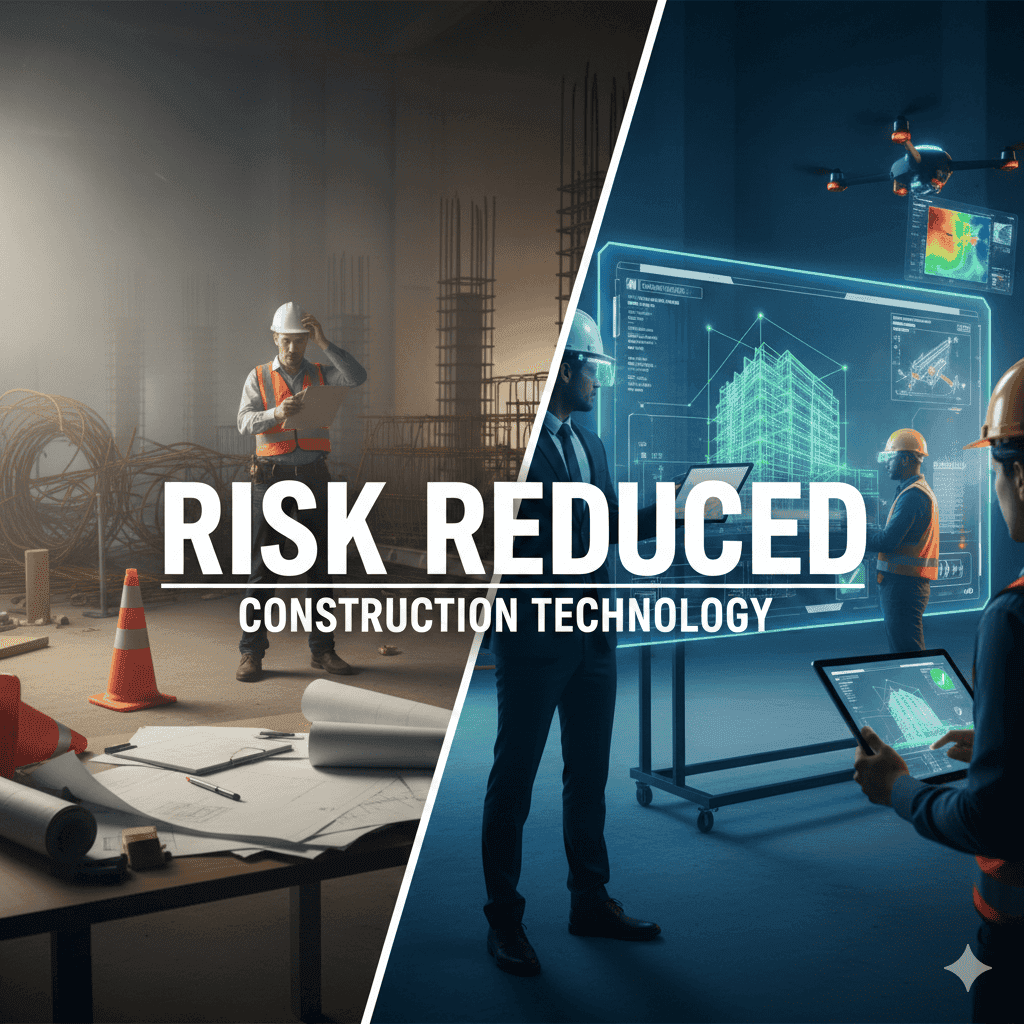
Construction technology revolutionizes risk management by transforming reactive paper-based processes into proactive digital strategies. Modern tools like Building Information Modeling (BIM), IoT sensors, and centralized platforms reduce financial overruns by up to 15%, prevent safety incidents through real-time monitoring, and create indisputable compliance documentation. By implementing these technologies, construction firms protect projects from costly delays, litigation, and safety violations while building competitive advantages in an increasingly digital industry.
Why Construction Projects Need Digital Protection
Construction remains one of the riskiest industries in the business world. A single project faces constant threats: budget overruns that evaporate profit margins, schedule delays that trigger penalty clauses, safety incidents that result in injuries and lawsuits, and compliance failures that invite regulatory fines.
For decades, construction managers relied on clipboards, paper forms, and manual coordination to manage these risks. That approach is no longer sufficient—or even viable—in today’s complex building environment.
Modern construction technology acts as a comprehensive digital defense system, protecting your projects from the moment planning begins until final handover. It doesn’t just help you react faster when problems occur; it prevents many problems from happening in the first place.
This guide walks you through proven technology strategies that reduce risk, ensure compliance, and transform how you deliver projects.
Understanding the Risk Landscape in Construction
Before diving into solutions, let’s clearly identify what we’re protecting against. Construction risks fall into distinct categories, each with serious financial and operational consequences.
The Four Major Risk Categories
Risk TypeCommon CausesTypical ImpactAnnual Industry CostFinancial RiskInaccurate estimates, scope creep, change order disputesBudget overruns of 10-30%Billions in lost profitsSchedule RiskPoor coordination, material delays, weather, reworkProject extensions of 20-50%Penalty clauses, lost opportunitiesSafety RiskInadequate monitoring, insufficient training, hazard exposureWorker injuries, fatalities, OSHA violations$170+ billion annually in direct/indirect costsCompliance RiskDocumentation gaps, inspection failures, regulatory changesFines, work stoppages, litigationHundreds of millions in penalties
Every construction technology strategy should directly address one or more of these risk categories. If a tool doesn’t reduce your exposure in these areas, question whether it’s worth implementing.
Building Information Modeling: Preventing Problems Before They Start
Building Information Modeling represents the single most powerful risk reduction tool available to modern construction teams. BIM moves project planning into a 3D digital environment where problems can be identified and solved before they become expensive field issues.
How BIM Protects Your Project
Think of BIM as a virtual construction site where you can test everything before spending a dollar on materials or labor. It’s like having a crystal ball that shows you exactly where problems will occur.
Traditional 2D Planning Problems:
- Mechanical pipes clash with structural beams (discovered during installation)
- Electrical conduits lack adequate clearance (requires expensive rework)
- Construction sequences create workflow bottlenecks (causes schedule delays)
- Material quantities are miscalculated (leads to budget overruns or shortages)
BIM Solutions:
Traditional ChallengeBIM Technology ResponseRisk ReductionDesign ConflictsAutomated clash detection identifies conflicts between architectural, structural, mechanical, and electrical elements before constructionEliminates 80-95% of coordination issuesQuantity Uncertainty5D BIM automatically calculates exact material quantities from the model, linking to cost databasesReduces estimation errors by 70%Schedule Ambiguity4D BIM visualizes construction sequences over time, identifying logistical constraints and optimal workflowsPrevents 60% of schedule-related delaysCommunication GapsCentralized model serves as single source of truth accessible to all project stakeholdersReduces RFIs by 50%
Implementing BIM Effectively
Simply purchasing BIM software doesn’t reduce risk. Effective implementation requires structured processes:
Create a BIM Execution Plan (BEP): Document who creates what information, when, and to what level of detail. This plan becomes your project’s data roadmap, ensuring everyone contributes properly to the central model.
Require Federated Models: All major subcontractors (mechanical, electrical, structural) must contribute their work to a combined model. Weekly coordination meetings use this federated model to identify and resolve clashes before they reach the field.
Establish Model Standards: Define naming conventions, file formats, and detail requirements. Inconsistent standards undermine BIM’s effectiveness and create new coordination problems.
Train Your Team: BIM only works when people know how to use it properly. Invest in training for project managers, superintendents, and key trade partners.
Real-Time Risk Monitoring Through IoT Technology
Internet of Things sensors and connected devices transform construction sites from information black holes into transparent, continuously monitored environments. This technology provides the real-time visibility needed to prevent incidents rather than react to them.
IoT Applications for Construction Safety
Environmental Monitoring Systems: Sensors placed strategically around the site continuously track conditions that could endanger workers or violate regulations:
- Air quality (detecting hazardous dust or fumes)
- Noise levels (ensuring compliance with municipal limits)
- Vibration intensity (preventing damage to adjacent structures)
- Temperature extremes (protecting workers from heat stress)
When any parameter exceeds safe thresholds, the system immediately alerts supervisors via mobile device. This instant notification allows corrective action before minor issues become serious problems.
Smart Wearable Technology: Modern personal protective equipment includes embedded sensors that monitor worker safety in ways human supervisors cannot:
- Location Tracking – Geofencing prevents workers from entering hazardous zones without authorization
- Fall Detection – Automatic alerts when a worker experiences a significant fall, enabling immediate emergency response
- Fatigue Monitoring – Biometric sensors identify workers showing signs of exhaustion before accidents occur
- Proximity Warnings – Alerts when workers approach moving equipment or dangerous machinery
One major commercial builder implemented smart wearables across their projects and saw reportable safety incidents decrease by 47% within the first year.
Equipment Telematics: GPS and diagnostic sensors on heavy machinery provide critical operational intelligence:
Equipment RiskTelematic SolutionBusiness BenefitUnexpected breakdownsPredictive maintenance alerts based on actual usage patternsReduces equipment downtime by 30-40%Unauthorized operationOperator ID verification ensures only certified personnel use machineryEliminates liability from unqualified operatorsInefficient usageUsage analytics identify idle time and suboptimal deploymentImproves equipment utilization by 25%Theft and misuseGPS tracking shows exact location and movement historyReduces equipment theft losses
Centralized Platforms: Creating Your Single Source of Truth
Perhaps the most transformative construction technology is the centralized project management platform. These cloud-based systems (like Procore, Autodesk Construction Cloud, or Aconex) consolidate all project information into one accessible, organized digital hub.
Why Centralized Platforms Matter
Traditional construction projects scatter critical information across dozens of locations: drawings in one place, RFIs in email, submittals in file cabinets, change orders in spreadsheets, and daily reports in site trailers. This fragmentation creates enormous risk.
Problems with Fragmented Information:
- Drawing versions conflict, leading to rework
- Change orders lack clear approval documentation, causing payment disputes
- Safety inspection records are incomplete or missing
- Communication history disappears when disputes arise
- Project status remains unclear to stakeholders
Centralized Platform Solutions:
Indisputable Audit Trail: Every action is automatically logged with timestamp, user identification, and relevant documentation. When disputes arise, you have clear evidence of exactly what happened and when.
Enforced Workflows: Change orders, RFIs, and submittals follow structured approval processes that prevent items from falling through the cracks. The system tracks who reviewed what, when they approved it, and what conditions they attached.
Version Control: Everyone always accesses the current version of drawings and specifications. The platform prevents work from proceeding based on outdated information.
Mobile Accessibility: Field teams access project information from tablets and smartphones, eliminating delays waiting for information from the office.
Frequently Asked Questions About Construction Technology
What is construction technology’s main advantage for risk management?
Construction technology’s main advantage is transforming risk management from reactive to proactive. Instead of responding to problems after they occur, digital tools predict issues before they happen, prevent coordination failures through better information sharing, and create comprehensive documentation that protects companies from disputes and compliance violations.
How does technology improve construction site safety?
Technology improves construction safety through continuous monitoring rather than periodic inspections. IoT sensors track environmental hazards in real-time, wearable devices alert supervisors to worker distress immediately, and AI systems analyze patterns to identify high-risk situations before incidents occur. Digital documentation also ensures safety protocols are consistently followed and verified.
Is construction technology affordable for small contractors?
Yes, modern construction technology is increasingly accessible to small contractors through subscription-based pricing models. Cloud platforms typically charge monthly fees based on project size, eliminating large upfront investments. Many contractors find these tools pay for themselves quickly through reduced rework, fewer disputes, and improved efficiency. Starting with one or two core technologies and expanding gradually makes adoption manageable.
What is a digital audit trail and why does it matter?
A digital audit trail is an automatic, unchangeable record of every project action, decision, and communication. It matters because it provides legal protection when disputes arise—you have documented proof of when instructions were given, inspections performed, and issues resolved. This documentation is often the difference between winning and losing litigation or insurance claims.
Can construction technology prevent budget overruns?
While technology cannot eliminate all budget risks, it significantly reduces them through accurate quantity takeoffs, real-time cost tracking, automated change order management, and early warning systems that flag cost trends before they become crises. Projects using comprehensive construction technology typically experience 10-15% fewer cost overruns than those relying on traditional methods.
Artificial Intelligence: Predicting Problems Before They Happen
The latest generation of construction technology incorporates artificial intelligence and machine learning to analyze patterns and predict future problems. This represents the ultimate evolution from reactive to predictive risk management.
AI Applications in Construction
Schedule Delay Prediction: AI algorithms analyze historical data from thousands of completed projects, identifying patterns associated with schedule delays. The system considers factors like:
- Weather forecasts and historical weather impact
- Subcontractor performance history
- RFI response time trends
- Material lead time patterns
- Permit approval timelines
By comparing your current project against this vast dataset, AI predicts delay risks months in advance. A project trending toward late completion gets flagged early, allowing proactive resource adjustments rather than crisis management.
Budget Forecasting: Traditional cost tracking shows where you are; AI predicts where you’re going. By integrating actual costs, committed costs, and historical spending patterns, AI generates dynamic budget forecasts that update continuously.
If your electrical work is consuming contingency faster than historical patterns suggest it should, the system alerts you immediately. You can investigate and adjust before burning through reserves.
Safety Risk Analysis: AI systems analyze video feeds (with appropriate privacy protections) and sensor data to identify risk behaviors and conditions:
- Workers not wearing required PPE
- Unsafe work positioning near edges or excavations
- Housekeeping issues creating trip hazards
- Multiple high-risk activities occurring simultaneously
Rather than waiting for monthly safety meetings to address patterns, supervisors receive immediate notifications enabling instant intervention.
According to the Occupational Safety and Health Administration, proactive safety management systems that incorporate real-time monitoring and predictive analytics can reduce construction injuries by 20-50% compared to traditional reactive approaches.
Digital Inspections and Compliance Documentation
Paper-based inspections and documentation create significant compliance risks. Forms get lost, handwriting becomes illegible, inspections are skipped when supervisors are busy, and proving you completed required checks becomes nearly impossible months later when disputes arise.
Digital inspection systems eliminate these problems while creating powerful legal protections.
Components of Effective Digital Inspection Systems
Inspection ElementTraditional MethodDigital TechnologyRisk MitigationDaily Safety ChecksPaper checklist, often incompleteMobile app with mandatory photo verificationCreates indisputable compliance recordQuality InspectionsHandwritten notes, subjectiveStandardized digital forms with objective criteriaReduces disputes over quality standardsProgress VerificationManual observation and notesPhoto documentation with automatic GPS/timestampPrevents payment disputesDeficiency TrackingPunch lists that get lostAutomated task assignment with follow-up remindersEnsures issues get resolvedRegulatory ComplianceHope your records are completeAutomatic compliance reports generated from daily dataPasses regulatory audits easily
Key Features of Effective Digital Systems
Automatic Geotagging and Timestamps: Every inspection record includes irrefutable proof of when and where it occurred. This removes any question about whether required checks happened.
Photo and Video Documentation: Visual evidence supports every inspection finding. Years later, when someone questions a decision, you can show exactly what conditions looked like.
Mandatory Fields: The system won’t let inspectors skip critical questions. This ensures compliance checks are thorough and consistent across all projects and inspectors.
Immediate Task Creation: When inspections identify deficiencies, the system immediately creates assigned tasks with due dates and automatic reminders. Nothing falls through the cracks.
Automated Reporting: Weekly and monthly compliance reports generate automatically from daily inspection data, saving hours of administrative work while ensuring accurate documentation.
Drones and Reality Capture: Objective Project Documentation
Drone technology and 3D laser scanning provide objective, comprehensive documentation of project conditions. This technology creates powerful risk management tools by establishing indisputable records of what actually exists on site.
Strategic Uses of Reality Capture
Progress Verification: Monthly drone flights create orthomosaic maps—detailed overhead imagery showing exact site conditions. Compare these maps against project schedules to verify work completion accurately. This documentation protects against inflated payment requests and provides clear evidence for progress billings.
Dispute Prevention: Before starting work that might be disputed later, capture detailed 3D scans of existing conditions. If conflicts arise about what existed before your work began, you have objective proof. This is particularly valuable for renovation projects and projects adjacent to existing structures.
Change Order Documentation: When owners request changes, immediately document current conditions with reality capture. This establishes a clear baseline showing exactly what work was included in the original scope versus added work, preventing disputes about change order pricing.
As-Built Records: Final laser scans capture precise as-built conditions, providing facility managers with accurate documentation for future maintenance and renovations. This adds value to your deliverables while protecting you from claims of inaccurate documentation.
Safety and Progress Monitoring: Regular drone surveys identify safety hazards (inadequate fall protection, poor housekeeping, unstable excavations) and track progress without requiring supervisors to physically walk the entire site. One superintendent can monitor multiple projects efficiently.
Best Practices for Reality Capture
Establish Regular Schedules: Weekly or monthly drone flights create consistent documentation timeline, making it easy to identify exactly when conditions changed.
Implement Data Management Protocols: Reality capture generates enormous data volumes. Establish clear protocols for how data is stored, accessed, and retained to ensure it’s available when needed.
Train Multiple Operators: Don’t rely on a single person to operate drones or scanning equipment. Cross-train team members to ensure capability continuity.
Respect Privacy and Regulations: Follow FAA regulations for drone operations, obtain necessary permits, and respect privacy concerns when capturing imagery.
Implementing Construction Technology: A Practical Roadmap
Understanding technology benefits is one thing; successfully implementing them is another. Many construction firms invest in technology only to see low adoption and minimal benefits. Here’s how to implement successfully.
Step 1: Assess Your Biggest Risks
Don’t try to implement everything at once. Identify your top three risk sources:
- Safety incidents costing you insurance premium increases?
- Change order disputes eating profit margins?
- Schedule delays triggering penalty clauses?
- Rework from coordination failures?
Target technology that directly addresses your most painful problems first.
Step 2: Start with Core Infrastructure
Begin with a centralized project management platform. This foundation supports everything else you’ll add later. Choose a platform that:
- Offers mobile accessibility for field teams
- Integrates with accounting and scheduling software
- Provides robust reporting and analytics
- Includes strong training and support
Get this working well before adding specialized tools.
Step 3: Train Thoroughly and Persistently
Technology only delivers value when people use it correctly. Invest heavily in training:
- Initial training for all users
- Refresher sessions quarterly
- Role-specific advanced training
- Quick-reference guides and videos
- On-site support during early adoption
Expect 3-6 months before teams become truly proficient.
Step 4: Establish Clear Policies
Create and enforce policies requiring technology use:
- All RFIs submitted through the platform
- Daily reports completed digitally by end of shift
- Weekly BIM coordination meetings
- Safety inspections done via mobile app
Make compliance non-negotiable and lead by example.
Step 5: Measure and Communicate Results
Track metrics proving technology value:
- Reduction in safety incidents
- Decrease in RFIs
- Improved schedule adherence
- Fewer change order disputes
Share these results with teams to reinforce the value of their technology adoption efforts.
The ROI of Construction Technology
Technology requires investment, but the returns substantially exceed costs for companies that implement effectively.
Typical Return on Investment
Cost CategoryAnnual Impact3-Year ROIReduced Rework2-4% of total project costs saved15-25x technology investmentFewer Safety IncidentsInsurance premium reductions, reduced incident costs10-20x technology investmentImproved Schedule PerformanceFewer penalty clauses, increased project volume20-40x technology investmentReduced DisputesLegal fees avoided, faster payment collection8-15x technology investment
Most companies implementing comprehensive construction technology report full return on investment within 12-18 months, with benefits accelerating in subsequent years as teams become more proficient.
Conclusion: Building Your Digital Defense System
Construction will always involve risk—it’s inherent in the business of creating complex structures in dynamic environments. But the level of risk you accept is increasingly a choice.
Companies continuing to rely on paper processes, fragmented communication, and reactive management expose themselves to entirely preventable problems. Their competitors using construction technology experience fewer incidents, deliver projects more predictably, and protect themselves from disputes more effectively.
The digital transformation of construction isn’t coming—it’s here. The question is whether your company will lead this transformation or become a cautionary tale about organizations that failed to adapt.
Start with your biggest risk exposures. Implement core technologies first. Train your teams thoroughly. Measure results and refine your approach. Within 12-18 months, you’ll wonder how you ever managed projects any other way.
The future of construction is built on data, transparency, and proactive management. Technology is the foundation of that future. The time to build your digital defense system is now.
Related Reading:For broader insights on project management, risk mitigation strategies, and business technology implementation, visit Gloobia.com for articles on innovation, professional development, and industry best practices.