
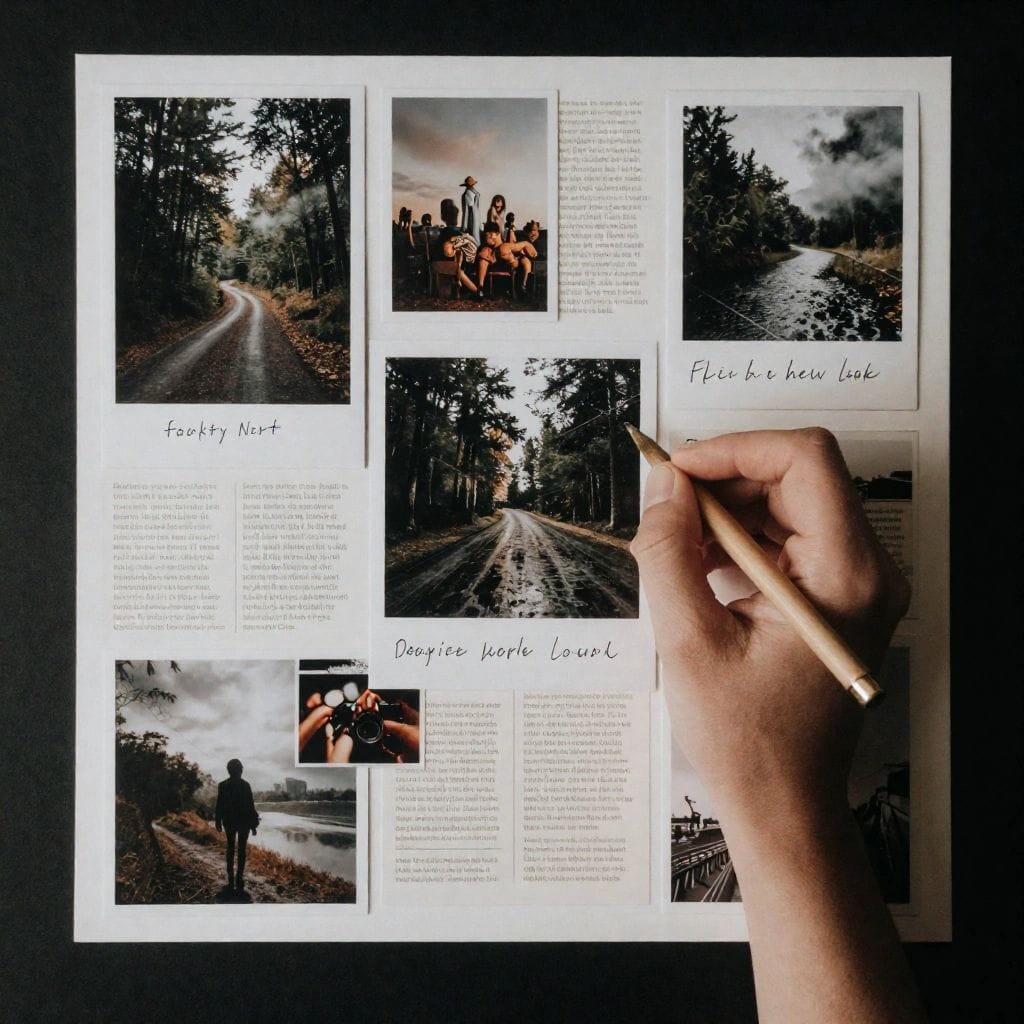
A vision board is a powerful tool that turns your dreams into something you can see every single day. Think of it as a visual reminder of where you want to go in life—whether that’s starting a business, getting healthier, traveling more, or finding inner peace.
This simple guide will show you exactly how to make a vision board that actually works, not just one that sits in your closet gathering dust.
What Is a Vision Board and Why Does It Work?
A vision board is a collection of pictures, words, and images that represent your future goals. You put them on a board (physical or digital) and look at them regularly to stay motivated and focused.
Here’s the simple science: When you look at images of your goals daily, your brain starts treating them as important. This activates a part of your brain called the Reticular Activating System (RAS), which then helps you notice opportunities and resources you might have missed before.
According to Psychology Today, visualization techniques like vision boards can significantly improve goal achievement by creating mental patterns that guide your actions.
It’s not magic—it’s about keeping your goals front and center so you make better daily choices that move you toward them.
Step 1: Get Clear on What You Really Want
The biggest mistake people make is creating vision boards without thinking first. You need to know exactly what you want before you start cutting out pictures.
Identify Your Life Goals
Break your life into these main areas and set one clear goal for each:
| Life Area | Example Vague Goal | Example Clear Goal |
|---|---|---|
| Career | “Better job” | “Promoted to Senior Manager by December” |
| Health | “Lose weight” | “Run a 5K race in under 30 minutes” |
| Money | “More income” | “Save $10,000 for emergency fund” |
| Relationships | “Better friendships” | “Host monthly dinner with close friends” |
| Travel | “See the world” | “Visit Japan in spring to see cherry blossoms” |
| Personal Growth | “Be happier” | “Meditate 10 minutes daily for mental clarity” |
Take Time to Reflect
Spend 15-20 minutes thinking or writing about these questions:
- What would make me excited to wake up every morning?
- Where do I want to be exactly one year from today?
- What have I always dreamed of doing but kept postponing?
- What would success look like in each area of my life?
Don’t rush this part. The clearer you are now, the more powerful your vision board will be.
Step 2: Choose Your Vision Board Type
You can create either a physical board or a digital one. Both work—it depends on your lifestyle and preferences.
Physical vs Digital Vision Boards
| Feature | Physical Board | Digital Board |
|---|---|---|
| What You Need | Cork board or poster, magazines, scissors, glue, markers | Laptop or tablet, Canva or Pinterest |
| Best For | People who love crafts and tactile activities | People who prefer easy updates and digital organization |
| Where to Display | Bedroom wall, office space, closet door | Phone lock screen, computer wallpaper, digital frame |
| Cost | $15-30 for supplies | Free (using free apps) |
| Easy to Update | No—need to redo sections | Yes—drag and drop new images anytime |
| Portability | Stays in one place | Access anywhere on your devices |
My recommendation: If you’re hands-on and creative, go physical. If you’re always on your phone or computer, go digital. You can also do both!
Step 3: Collect Images and Words That Inspire You
Now comes the fun part—gathering visuals that represent your dream life. The key is choosing images that make you feel something strong when you look at them.
Where to Find Your Vision Board Images
| Source | Best For | How to Use It |
|---|---|---|
| Old Magazines | Fashion, lifestyle inspiration, bold text | Cut out images and headlines that resonate |
| Specific aesthetics and goals | Search your exact goal (e.g., “cozy home office”) | |
| Unsplash | High-quality free photos | Download professional images for digital boards |
| Pexels | Free stock photography | Great for wellness, nature, and lifestyle images |
| Your Own Photos | Personal motivation | Use photos of yourself happy or places you’ve loved |
| Canva | Digital creation | Pre-made templates and design elements |
What Types of Images to Look For
For Career Goals: Images of offices you admire, people in your dream role, logos of companies you want to work with
For Health Goals: Healthy meals you want to make, people doing activities you want to try, your ideal energy level
For Financial Goals: The exact thing you want to buy, bank account screenshots with your target number, symbols of financial freedom
For Relationship Goals: Happy couples or families, friends laughing together, peaceful moments
For Travel Goals: Specific destinations with landmarks, activities you want to experience, cultural experiences
Add Powerful Words and Phrases
Include short, positive statements written in present tense as if they’re already true:
- “I am confident and capable”
- “Abundance flows to me naturally”
- “My body is healthy and strong”
- “I attract positive opportunities”
- “I am exactly where I need to be”
These affirmations work alongside your images to reinforce your goals. According to Healthline’s guide on affirmations, positive self-statements can reduce stress and increase motivation.
Step 4: Arrange Everything Strategically
Don’t just randomly stick things on your board. A well-organized vision board is easier for your brain to process.
Layout Options That Work
The Center-Focus Layout
- Put a photo of yourself smiling in the center
- Arrange your goals in a circle around you
- This reminds you that YOU are creating this life
The Grid Layout
- Divide your board into 6-9 sections
- Assign each section to a life area (career, health, money, etc.)
- Keep each section organized and clear
The Timeline Layout
- Arrange goals from left to right based on when you want to achieve them
- Near future on the left, long-term on the right
- Great for sequential goals
Design Tips for Maximum Impact
| Do This | Avoid This |
|---|---|
| Leave white space between images | Overcrowding every inch of the board |
| Use 3-5 dominant colors | Too many clashing colors |
| Include 8-12 main images | More than 20 images (creates overwhelm) |
| Make text readable from 3 feet away | Tiny text you need to squint to read |
| Mix images with words | Only images or only words |
Your brain needs room to process what it’s seeing. A clean, organized board is much more effective than a cluttered one.
Step 5: Display and Use Your Vision Board Daily
This is where most people fail. They make a beautiful board, then hide it away. Your vision board only works if you see it and engage with it regularly.
Where to Put Your Vision Board
For Physical Boards:
- Across from your bed (first thing you see when you wake up)
- On your bathroom mirror
- Inside your closet door (see it while getting dressed)
- Above your desk or workspace
- On your bedroom door
For Digital Boards:
- Phone lock screen
- Computer desktop wallpaper
- Screensaver on your tablet
- Digital photo frame
- Background on your smart TV
The rule is simple: put it somewhere you’ll see it at least twice daily.
Your Daily Vision Board Practice
Spend just 2-3 minutes each morning doing this:
- Look at each image on your board slowly
- Feel the emotions you’d have if this was your life right now
- Visualize yourself actually living that moment
- Think of one small action you can take today toward any goal
- Say “thank you” as if you’ve already received these blessings
This daily practice keeps your goals fresh in your mind and helps you spot opportunities throughout the day.
Take Action Based on What You See
A vision board isn’t magic by itself. It’s a motivational tool that needs to be paired with real action.
If your board shows:
- A fit body → Go for a 15-minute walk today
- A dream job → Update one section of your resume
- Financial freedom → Transfer $20 to your savings account
- A trip to Paris → Research flights or start learning French
- A loving relationship → Reach out to a friend you miss
Small daily actions compound into major life changes. For more on taking innovative action toward your goals, check out how to innovate in tech and life.
The Psychology Behind Why Vision Boards Work
You don’t have to believe in manifestation or the law of attraction for vision boards to be effective. Here’s the real psychology:
How Your Brain Responds to Visualization
| Brain Function | How It Helps You |
|---|---|
| Neural Pathways | Your brain creates mental “practice runs” of achieving your goals |
| RAS Activation | You start noticing resources and opportunities related to your goals |
| Emotional Association | Positive feelings motivate you to take action |
| Priority Setting | Your brain recognizes what’s important and filters out distractions |
| Consistent Reminder | Daily exposure keeps goals from being forgotten |
When you repeatedly see images of your goals, your brain starts treating them as priorities. This means you unconsciously make better decisions that align with those goals throughout your day.
Common Vision Board Mistakes to Avoid
| Mistake | Why It’s a Problem | The Fix |
|---|---|---|
| Too many goals | Dilutes your focus and energy | Stick to 6-10 major goals maximum |
| Vague images | Brain doesn’t know what to focus on | Be specific (not “a car” but “a red Tesla Model 3”) |
| Someone else’s dreams | You won’t feel motivated | Only include what YOU truly want, not what you “should” want |
| Hidden board | Out of sight = out of mind | Display prominently where you’ll see it daily |
| No action | Vision without action is just daydreaming | Pair visualization with concrete steps |
| Set and forget | Goals change as you grow | Update quarterly or when you achieve something |
Frequently Asked Questions
When Is the Best Time to Make a Vision Board?
The best time is whenever you feel ready for change. Many people create new boards on New Year’s Day, their birthday, or at the start of a new season. However, you can make one any day you decide you’re serious about your goals. The important part isn’t the date—it’s your commitment to using it.
How Many Goals Should I Put on One Board?
Aim for 6-10 main goals across different life areas. Having too many (15-20+) creates confusion and splits your focus. If you have many goals, consider making multiple boards for different purposes—one for career, one for personal life, or one for short-term and another for long-term goals.
Do Vision Boards Really Work or Is It Just Positive Thinking?
Vision boards work as a practical goal-setting tool, even if you don’t believe in manifestation. They function by keeping your priorities visible, which influences your daily decisions and helps you recognize relevant opportunities. Studies show that people who visualize their goals are more likely to achieve them because they maintain consistent focus.
Can I Make a Vision Board on My Phone?
Absolutely! Apps like Canva, Pinterest, and even simple collage-making apps work perfectly. The advantage of a digital board is that you can update it easily and always have it with you. Set it as your lock screen so you see it every time you check your phone.
What If I Achieve a Goal on My Board?
Celebrate it! Some people place a gold star or checkmark over achieved goals, others remove them and add new ones. Acknowledging your wins is crucial—it reinforces that the process works and motivates you to keep going. Take a moment to feel gratitude for what you manifested.
Should I Tell People About My Vision Board?
This is personal preference. Some people find that sharing their goals creates accountability and support. Others prefer to keep their vision board private until they see results. Do what feels right for you. Just remember that your vision board is for you, not for impressing others.
Your Vision Board Checklist
Use this simple checklist to make sure your vision board is set up for success:
| Task | Completed? |
|---|---|
| Spent time reflecting on my true goals | ☐ |
| Chose specific, clear goals (not vague wishes) | ☐ |
| Gathered images that create strong positive emotions | ☐ |
| Included affirmations in present tense | ☐ |
| Arranged layout with white space and organization | ☐ |
| Placed my photo in the center (optional but powerful) | ☐ |
| Displayed board where I’ll see it daily | ☐ |
| Set a reminder to view it every morning | ☐ |
| Identified one action I can take today | ☐ |
Quick Start Guide: Make Your Vision Board This Weekend
Don’t have much time? Here’s a simple weekend plan:
| Time | Activity |
|---|---|
| Friday Evening (30 min) | Reflect on goals and write down 6-8 specific things you want |
| Saturday Morning (1 hour) | Collect images from magazines, Pinterest, or photo sites |
| Saturday Afternoon (1 hour) | Arrange and glue/design your board |
| Sunday Morning (10 min) | Display your board and do your first visualization practice |
By Sunday, you’ll have a complete vision board ready to guide you toward your dream life.
Tips for Making Your Vision Board More Powerful
Use Present Tense: Instead of “I will be successful,” write “I am successful.” This tricks your brain into believing it’s already happening.
Add Dates: If you have a specific deadline, include it. “Marathon – October 2026” is more concrete than just a running image.
Include Yourself: Adding photos of yourself (happy, confident ones) personalizes the board and reminds you that YOU are creating this life.
Make It Beautiful: You should love looking at your board. If it’s not aesthetically pleasing to you, you won’t want to view it daily.
Keep It Private If Needed: Not everyone needs to see or understand your vision board. If keeping it personal feels better, that’s perfectly fine.
Taking Your Vision Board to the Next Level
Once you’ve mastered the basics, try these advanced techniques:
Create a Vision Book: Instead of one board, make a small notebook or binder where each page represents a different goal with multiple images and detailed notes.
Make a Digital Slideshow: Create a slideshow that rotates through your goal images every 5 seconds. Watch it during your morning coffee.
Record Audio Affirmations: Record yourself reading your affirmations and listen while looking at your board for a multi-sensory experience.
Set Monthly Reviews: Schedule time each month to review what’s working and what needs adjustment. Your goals may evolve, and that’s okay.
Final Thoughts: Your Dreams Deserve Your Attention
Making a vision board is one of the simplest yet most powerful things you can do for your future. It takes just a few hours to create but can guide you for an entire year or more.
Remember these key points:
✓ Be specific about what you want ✓ Choose images that make you feel something ✓ Display your board where you’ll see it daily ✓ Spend 2-3 minutes each morning visualizing ✓ Take small actions every day toward your goals
A vision board isn’t about wishing and hoping. It’s about getting crystal clear on what you want and reminding yourself of it so consistently that you naturally make choices that lead you there.
Your dream life won’t magically appear just because you made a pretty collage. But that collage will keep you focused, motivated, and aware of opportunities that can make those dreams real.
Stop putting off your happiness. Stop waiting for the “right time.” The right time is now.
Grab a board, some magazines, or open Canva. Spend the next hour getting clear on what you really want. Then look at it every single day and watch how your life starts shifting in the direction of your dreams.
What will you put on your vision board first? That dream vacation? The business you want to start? The healthy body you’re working toward?
Whatever it is, make it visible. Make it clear. Make it happen.
Your dream life is waiting for you to create it—one vision board at a time.
