
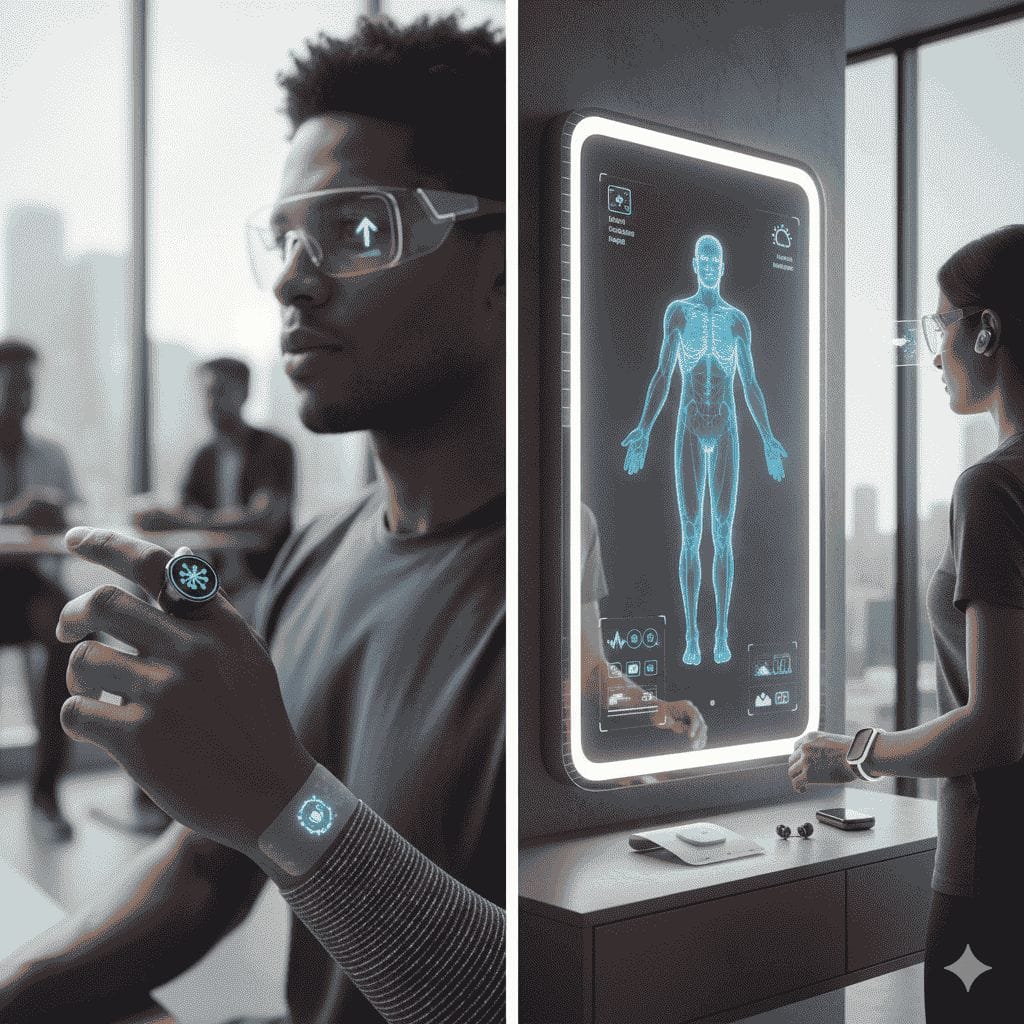
The top innovations in wearable tech for 2026 include AI-powered smart rings that act as cognitive assistants, phone-free smartglasses with real-time translation, continuous metabolic monitoring patches, smart fabrics with embedded sensors, solar and kinetic charging systems, emotional AI tracking, medical-grade monitoring devices, edge AI computing for enhanced privacy, and smart earbuds with advanced health sensors. These breakthroughs transform wearables from simple fitness trackers into proactive health companions that predict issues before symptoms appear.
The world of personal technology has undergone a dramatic transformation. What began as simple pedometers has evolved into sophisticated devices that seamlessly blend into our daily lives, monitoring our health, enhancing our productivity, and even predicting medical conditions before they manifest.
At Gloobia, we’ve been tracking these technological shifts closely. The latest developments in 2026 represent more than incremental improvements—they signal a fundamental reimagining of how technology interfaces with the human body.
This comprehensive guide explores the ten most significant innovations in wearable tech that are reshaping healthcare, fitness tracking, and everyday convenience.
1. Cognitive Assistant Smart Rings

Smart rings have evolved far beyond simple step counters. Today’s most advanced models function as pocket-sized artificial intelligence assistants that live on your finger.
These tiny devices pack impressive capabilities:
- Voice-activated note capture that syncs instantly to productivity apps like Notion and Google Calendar
- Location-aware reminders that vibrate when you pass relevant locations (imagine a gentle buzz as you walk by the grocery store)
- Conversational AI that can analyze patterns in your daily routine and provide personalized insights through connected earbuds
The miniaturization achievement here is remarkable—fitting microphones, processors, and haptic feedback into a device smaller than most wedding bands represents a significant engineering breakthrough.
2. Wall-Mounted Biometric Health Stations
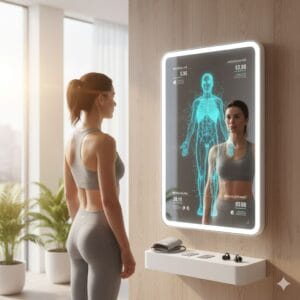
The definition of “wearable” continues to expand. Modern biometric mirrors represent a hybrid approach—stationary displays that work in concert with wearable sensors to provide comprehensive health assessments.
These systems use advanced optical sensors to analyze subtle changes in facial blood flow patterns, measuring over 60 distinct health markers in seconds. The technology calculates your biological age, assesses cardiovascular risk, and tracks metabolic efficiency without requiring blood draws or uncomfortable sensors.
For those interested in the broader landscape of technology innovations, these biometric stations represent the convergence of AI, optical sensing, and preventive medicine.
3. Standalone Augmented Reality Eyewear
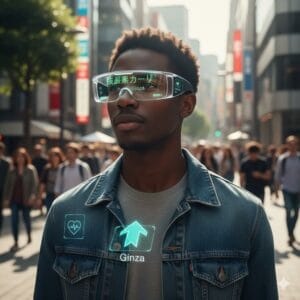
For years, smartglasses required smartphone connectivity. That limitation has finally been shattered. The newest generation operates completely independently with built-in eSIM cellular connectivity.
Key features transforming daily experiences include:
- Real-time language translation overlaid directly in your field of view during conversations
- Augmented reality navigation with directional arrows appearing on sidewalks and roads
- Live health metrics displayed during exercise without glancing at your wrist
According to research from the International Data Corporation, augmented reality wearables are projected to reach mainstream adoption by 2027, with current sales trends showing exponential growth.
4. Real-Time Metabolic Monitoring Systems

Preventive healthcare has entered a new era. Modern metabolic patches move beyond basic glucose tracking to provide comprehensive biochemical insights.
These coin-sized adhesive sensors continuously monitor:
- Blood glucose fluctuations throughout the day
- Cortisol levels indicating stress response patterns
- Lactate accumulation during physical exertion
- pH balance and hydration status
This granular data enables hyper-personalized nutrition recommendations. Instead of generic dietary advice, users receive specific feedback about which foods cause energy crashes, trigger inflammation, or optimize their performance.
5. Sensor-Embedded Smart Textiles

Why strap devices to your body when your clothing can monitor your health? Electronic textiles represent a paradigm shift in wearable design.
Conductive fibers woven directly into fabrics create a distributed sensor network across the garment. This approach offers several advantages over traditional wrist-worn devices:
- Greater surface area contact provides more accurate readings
- Posture monitoring through multiple contact points
- Muscle fatigue detection for athletes
- Hydration level tracking through skin conductivity
Early adopters include professional athletes seeking competitive advantages and elderly care facilities using the technology for fall prevention and vital sign monitoring.
Evolution Comparison: 2024 vs 2026 Wearable Technology
| Feature Category | 2024 Technology | 2026 Innovation |
|---|---|---|
| User Interface | Touchscreen displays and mobile applications | Voice commands, haptic feedback, and AI-driven predictions |
| Battery Duration | 24-48 hours typical usage | 7-25 days with solar/kinetic charging |
| Data Analysis | Reactive reporting of past activities | Proactive predictions of future health events |
| Device Format | Predominantly wrist-worn smartwatches | Rings, eyeglasses, textiles, and earbuds |
| Network Connection | Bluetooth paired with smartphones | Independent operation with eSIM and satellite connectivity |
6. Self-Sustaining Power Systems

Battery anxiety—the constant worry about device charge levels—is becoming obsolete. The latest wearables incorporate dual charging mechanisms:
- Kinetic energy harvesting that converts body movement into electrical charge
- Transparent solar cells integrated into watch faces and eyeglass lenses
These innovations extend battery life from the typical 1-2 days to an impressive 25+ days under normal usage conditions. Some devices achieve perpetual operation without ever requiring traditional charging.
7. Emotional Intelligence and Mental Health Monitoring
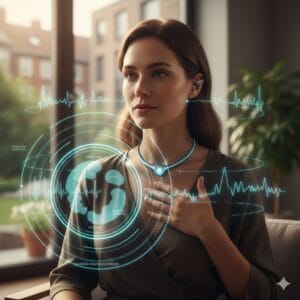
Mental health tracking now matches the sophistication of physical fitness monitoring. Advanced wearables utilize electrodermal activity sensors to detect subtle changes in skin conductivity associated with emotional states.
The technology goes beyond simple stress detection. AI algorithms analyze patterns in:
- Voice tone and speech patterns
- Heart rate variability fluctuations
- Sleep quality metrics
- Activity level changes
These systems can preemptively suggest interventions—such as breathing exercises or short breaks—before stress levels become problematic. It’s like having a personal wellness coach that never sleeps.
8. Clinical-Grade Medical Wearables

Regulatory approval from organizations like the FDA has legitimized wearables as genuine medical devices. The newest Class II medical wearables provide hospital-quality monitoring from the comfort of home.
Notable examples include:
- Advanced hearing aids that double as comprehensive health monitors with automatic fall detection and emergency alerting
- Adhesive patches providing continuous blood pressure monitoring without uncomfortable cuffs
- ECG-enabled devices that can detect atrial fibrillation and other cardiac irregularities
These devices bridge the gap between consumer wellness products and professional medical equipment, enabling remote patient monitoring and reducing hospital visits for chronic condition management.
9. On-Device AI Processing (Edge Computing)

Privacy concerns have driven a fundamental architectural change in wearable design. Modern devices process data locally using edge AI rather than sending information to remote servers.
This approach offers two critical advantages:
- Enhanced privacy protection—sensitive health data never leaves the device
- Instant response times for critical alerts like cardiac arrhythmias or seizure detection
According to research from IEEE, edge computing in wearables represents one of the most significant technological shifts in personal electronics, balancing functionality with data security.
10. Advanced Health-Tracking Earbuds
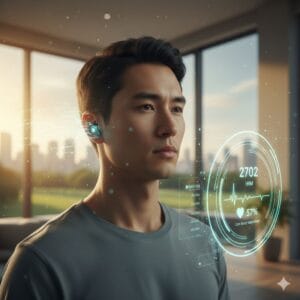
The ear canal has emerged as an ideal location for health monitoring. Smart earbuds now incorporate photoplethysmography sensors that rival or exceed the accuracy of wrist-based devices.
The thinner skin and stable positioning in the ear canal provide consistently accurate readings for:
- Heart rate monitoring
- Blood oxygen saturation
- Core body temperature
Beyond health tracking, these devices feature sophisticated audio processing that can selectively amplify the voice of someone you’re facing while suppressing background noise—imagine having superhuman hearing in noisy environments.
Smart Rings vs Smartwatches: Feature Comparison
| Feature | Smart Rings | Smartwatches |
|---|---|---|
| Sleep Tracking | Excellent – comfortable for 24/7 wear | Good – may be uncomfortable during sleep |
| Workout Display | Limited – no screen for real-time metrics | Excellent – detailed real-time data display |
| Discreetness | Highly discreet – appears as jewelry | Noticeable – clearly a tech device |
| Battery Life | 5-7 days typical | 1-3 days for feature-rich models |
| Best For | Passive health monitoring, sleep analysis, subtle tracking | Active fitness tracking, workout guidance, app integration |
Frequently Asked Questions
What represents the most significant advancement in wearable technology for 2026?
The shift from reactive to proactive health monitoring defines 2026’s breakthrough. Modern wearables leverage edge AI to predict potential health issues—such as impending illness or cardiac events—days before symptoms manifest, fundamentally changing healthcare from reactive treatment to preventive intervention.
How do smart rings compare to traditional smartwatches?
Smart rings excel in sleep tracking accuracy and discreet form factor, making them ideal for 24/7 wear without discomfort. Smartwatches maintain advantages for active fitness enthusiasts who benefit from screen-based real-time metrics during workouts. The choice depends on primary use case—continuous passive monitoring versus active fitness tracking.
How do modern wearables protect user privacy?
The majority of 2026 wearables employ edge computing architecture, processing all AI analysis locally on the device hardware rather than transmitting data to external servers. This approach dramatically reduces data breach vulnerability while maintaining full functionality.
What battery life can users expect from current wearables?
Battery performance varies by device type and usage patterns. Basic fitness trackers now achieve 15-25 days per charge, while feature-rich smartwatches typically last 5-7 days. Devices with solar or kinetic charging can operate indefinitely under normal conditions without requiring traditional charging.
Are wearables accurate enough for medical diagnosis?
FDA-cleared Class II medical wearables provide clinical-grade accuracy suitable for chronic condition monitoring and diagnostic support. However, they complement rather than replace traditional medical care. Always consult healthcare professionals for diagnosis and treatment decisions.
The Future Is Proactive
The innovations in wearable tech showcased throughout 2026 transcend mere gadgetry. These devices have matured into essential health companions that actively work to improve our wellbeing.
Whether through a ring that organizes your thoughts, glasses that translate foreign conversations in real-time, or clothing that monitors your vital signs, wearable technology has become deeply integrated into the fabric of daily life.
The trajectory is clear: technology is no longer something we simply carry—it’s something that actively protects us, guides us, and enhances our human capabilities.
For more insights on emerging technology trends and innovations, explore our comprehensive coverage at Gloobia.
